Parliament of Victoria | Legislative Council | Valedictory
9 September 2026
David ETTERSHANK (Western Metropolitan Region):
I start by acknowledging the traditional owners of the unceded lands and waterways on which we meet today and who I have represented in the Western Metro Region, the Wurundjeri, Bunurong and Wadawurrung people of the Kulin nation. They have been the custodians of this land since time immemorial, and there is so much that we have failed to learn from them. I pay my respects to their elders past, present and emerging, and also any First Nations people who are with us today.
Summarising the highlights of the last four years was a lot harder than I thought it would be. My repeated drafts inevitably ended up in the bin. Thankfully, ChatGPT was there to help, although having said that, I should say at the outset that all or part of this presentation may in fact be entirely inaccurate.
It is now almost 53 years since I started work, and it is time for me to hang up my sword and shield, as they say. I can unequivocally state that my final four working years in Parliament is about the most novel way I could have finished up my life of paid employment.
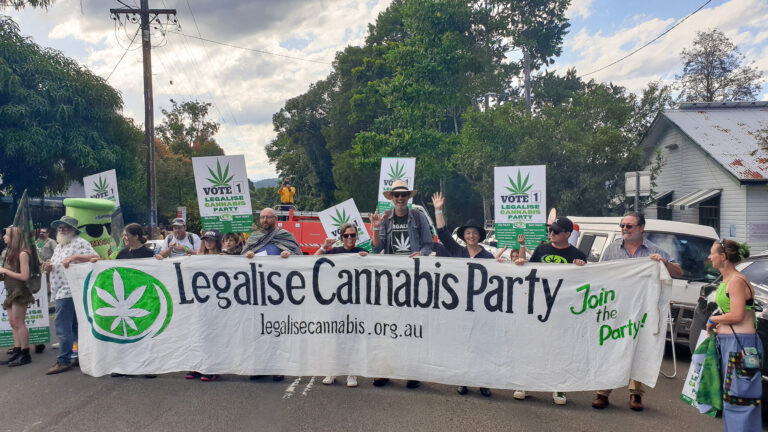
I have always sort of worked on a project basis, and irrespective of the complexity of the challenges or the tasks, it has been a case of breaking it into doable chunks and then going from there. So coming into Parliament, I thought, ‘Well, how hard could legalising cannabis be?’ Well, here we are four years later, and I have my answer.
And I have to say, if I hear one more government member tell me that ‘It’s not good policy, but it’s good politics’, or ‘Yes, it’s overwhelmingly popular, but it’s not a priority’, or ‘I support reform, but I’m not free to act on it’ or my personal favourite, ‘We have to be seen to be tough on crime’, I will possibly run amok. However, having vented my spleen, colleagues, I shall now move on to topics less reflective of my accumulated political scar tissue.
There have certainly been many parliamentary moments that I will remember with great fondness and pride. While the lack of progress on cannabis reform has been disappointing, it has been rewarding and even exhilarating to push the envelope on a range of other issues, like being part of the progressive crossbench campaign to get pill testing at Victorian festivals as well as at a fixed site in Fitzroy – despite the claims from the usual suspects about the dire outcomes of such a reform, all we have seen are fewer hospital presentations and a hell of a lot of relieved parents; or seeing medicinal cannabis patients finally being given the right to have their day in court when they test positive for THC but are unimpaired while driving.
It is such a basic right but, equally, such an important rejection of the stigma faced by the cannabis community. That it was supported by all the parties in this place bar the Shooters and One Nation gives me hope that it will endure into the next Parliament and beyond.
It has also been a real honour to support some major social reforms that we have seen in the last four years. Following the lead from our New South Wales Legalise Cannabis Party comrade Jeremy Buckingham, it was terrific to see the government adopt our vicarious liability private members bill virtually verbatim. Nothing can undo the terrible, terrible harms done to survivors of historical institutional sexual abuse, but to have such a contrived defence as vicarious liability available to those churches, which so often turned a blind eye or even facilitated such abuse, was an outrage.
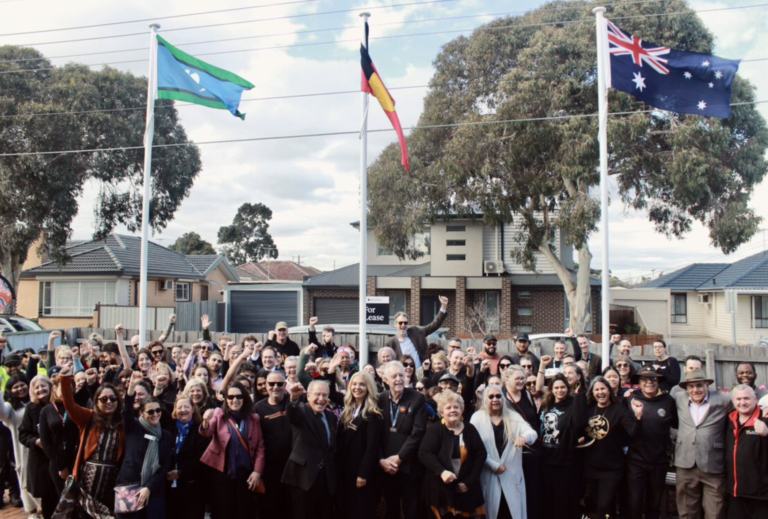
On getting treaty over the line – while I was but a tiny part of that process and Ms Payne likewise – it was a profound honour to have been one of the deciding votes that delivered the historic statewide treaty here in Victoria, and I will be eternally grateful for the opportunity to have participated in that. After more than 200 years of failed policy, this may finally deliver meaningful change for our First Nations brothers and sisters, and I would like to express my deep respect to the generations of Aboriginal and Torres Strait Islander activists who have struggled to redress this – our country’s greatest shame.
I have been pretty vocal in critiquing a lot of the actions of this government, it has been alleged, on a range of issues, but I do want to take this opportunity to recognise a person who I see as a true Labor hero in the historical sense of that term, and that is Natalie Hutchins, who lived and breathed the delivery of treaty for more than a decade. She is I think an inspiration to us all. To any colleagues here who are in the other place for Ms Hutchins’s valedictory, but for the fact that I had a prior commitment, I would be over there as well.
The challenge before the next government will be to ensure that treaty can do its necessary work for not only our First Nations people but for all Victorians, and I implore the Liberal and National parties to reconsider their commitment to abolishing it. It has been an absolute privilege to work with agencies such as the Victorian Aboriginal Legal Service, the Victorian Aboriginal Community Controlled Health Organisation, Djirra and the First Peoples’ Assembly, now Gellung Warl, in articulating their concerns in this chamber.
While I am briefly in fanboy mode, I would also like to pay tribute to my friend Lily D’Ambrosio, who has led the critical but profoundly problematic mission of guiding our state away from coal and gas to renewable energy. She has done this with quiet determination and great skill. Hats off to you, Lily.
To my friends and comrades in the union movement, I have been proud to work with you to advance workers rights in this place and equally dismayed that so many of those fights were simply to defend existing rights and entitlements.
Progressive governments sometimes over time lose their connection to the movements that built them, and changes like those to WorkCover and for injured workers should be a source of shame. Likewise, to the many activists in the community, legal and advocacy sectors: it has been great to work together to slow the race to the bottom.
The ineffective pissing competition to be the party seen as toughest on crime: there are real and understandable fears in our community over public safety and over crime, but they will not be solved by arresting more young socially marginalised and overly criminalised working-class people. It is deplorable and antithetical to common sense and what I believed were core Labor values. Sometime next year our jails and remand centres will be full, with more prisoners on remand than have been convicted, and that is pretty shameful.
My fondest memories of my time in this place will be the many community campaigns I have been privileged to support. At our first meeting with the then Attorney-General, Ms Payne and I were invited to provide a brief verbal CV – over a cocktail, I will say – and when it was my turn, I was told, ‘No need; your reputation precedes you.’ I am happy to take the four points on that one.
I came into this place as a one-term MP – here for a good time, not a long time – but I would qualify that by saying that my idea of a good time is fighting the good fight and making trouble, and I will be done with that when I am dead. I have had a spectacularly good team to share these good times with. I think we have all understood how fleeting our time is in this place, and my staff have equally revelled in fighting the good fight for our constituents in the west and in the cannabis community, there being a very significant overlap between the two.
Early in the piece we coined the phrase ‘The west is the best, but it gets so much less’. It has been true for decades and at so many levels, be it public transport, roads, schools, libraries, health, community and culturally supportive services or public housing. The people of the west will tell you that they have been ignored by conservative governments and taken for granted by Labor governments. That is not to say that there have not been many Labor champions for the west, but the proof is on the ground, and it is now graphically reflected, I suspect, in the polls.
Successive governments have said that these issues stem from having the fastest population growth in the country, and it is true that three of the 10 fastest growing growth corridors in the country are in our Western Metro region, but that has, to my mind, always been a bit of a facile argument. If it is growing too fast to service properly, then stop releasing or approving vast tracts of land for broadacre residential developments.
We have had some memorable fights and some no less memorable victories, like working with the community of Little River to block Pacific National’s vast multimodal freight terminal, which would have adjoined the Ramsar-listed Werribee wetlands, a place with more species of bird than Kakadu – there is your fact for the night – or standing with the residents of Sunbury and Bulla, who previously got shafted with 1.5 million cubic metres of West Gate Tunnel spoil and now face a giant waste-to-energy incinerator dumping toxic fumes over their homes, schools, shops and agriculture.
And now we have data centres. In my 40-plus years of campaigning I have never seen a campaign explode like this one, and I implore the government to join the six western and northern councils to declare a moratorium on further planning approvals until they develop proper regulations and achieve a level of social licence for these data centres.
All in all it has been a joy to roll up the sleeves and work with our communities to achieve change, to improve lives and to protect amenity.
Before I move on to quite a few thankyous, I want to talk briefly about the rise of the far right. I thought we would go out on a party note. The far right are no longer simply marching on the streets, they are seeking and winning parliamentary representation. Germany is a striking example, and Australia is not immune. Over time we have seen the erosion of the social contract and we have seen the erosion of the social wage.
I have spoken often about the lack of a social contract on proposals like data centres, waste incinerators and any number of inappropriate developments where people felt viscerally that they had been ignored or misled by government and by politicians.
By ‘social wage’ I mean the principle which says that if the government spends our taxes on fundamentals such as services, education, public transport and infrastructure, it is as good as money in your pocket. If in the west you can get a decent bus, you do not need to own 2½ cars. These two things are fundamental to a healthy and cohesive society. Without them we invite a brand of populism which legitimises and amplifies grievances then directs that anger against people who are simply perceived as different.
We seem to forget that this country and our allies fought and died to stop this very movement. History does not necessarily repeat itself, but it does rhyme. People who are supporting these parties believe the system is broken – and let us face it, they are not entirely wrong. But we cannot restore public trust in our institutions by burning them to the ground. We need to rebuild them one brick at a time, starting with truth, transparency and faith in the common sense of our wonderful and diverse people.
We also need a Parliament that reflects the diversity of our uniquely multicultural society. That is partly why I am entirely comfortable not recontesting the next election. I know there have been concerns expressed that there is a chronic pending shortage of old white guys in this place. I recognise that my leaving will potentially contribute to that shortfall – as, may I say with the greatest respect, President, will your pending departure.
But I am entirely confident, colleagues, that merit and the free market can deal with that problem, and I thoroughly oppose any sort of quota to remedy it. That one fell flat. To that end, I wish our Western Metro candidates Xavier Menta and Channa Burson the very best, and I will be with them in the trenches and on the barricades, if that is not too totally mixing my metaphors.
At the risk of appearing like one of those Logie winners who keep talking long after the music starts playing, I do have a few thankyous that I need to get on the record. In terms of the party I would like to thank our federal president and spiritual godfather Michael Balderstone, our federal secretary the incredibly hardworking Craig Ellis and our federal executive.
Love also to all the wonderful folks in and around Nimbin who keep us grounded. Thank you to my friend, comrade and colleague of almost 30 years Ken Ridgwell, who in addition to everything else also now serves as both our state and federal treasurer. When I was preselected they did not think that I came with financial brilliance as well.
Thank you to the fabulous and inexhaustible Mira Fraser, our state secretary and the beating heart of Legalise Cannabis Victoria. Mira came in and set up our offices when Ms Payne and I were first elected and in a state of what I can only describe as barely contained panic and yes, I will always be grateful to her for that.
I also express my thanks to our state executive comrades. My special love to the minties, Tony, Raf and Carmello, who were there when we had nothing but $20,000 for the entire statewide campaign and had been preselected two weeks before the early voting centres opened. They were, I think, very correct in their analysis that given the 585,000 people on the roll, a two-week doorknocking strategy probably was not going to be incredibly effective. Nonetheless, we had a small bunch and were at those early voting centres every day, and somehow I ended up here, as did Ms Payne.
To the grassroots collective, Xavier, Hannah and all of the other wonderful young seedlings, as we call them, I wish them every success and I thank them for all of the time they spend and all the times they just turn up, turn out and support the cause. To the roughly 3500 party members here in Victoria, my thanks to you for keeping the face of limited progress.
I would like to thank my wonderful parliamentary team. Together we have kept our shoulders firmly to the wheel and I believe have punched well above our weight. I do seem to be mixing my metaphors tonight. Among those who got us going four years ago are Tony Lee, Andrew Shears and the irrepressible and veteran of this place Fiona Patten.
My thanks to Christine Tondorf, our former comms manager, who 18 months ago said, ‘We should look at data centres. I reckon that could be going to be a big issue.’ She was damn right on that. I would particularly like to recognise my current crew: Paul Fawcett, always at the barricades and never really that happy unless he has got six screens open at the same time; and our formidable campaigns coordinator Lucy Best, fresh back from the Edinburgh fringe festival.
Somehow I have a staff of five and two of them have been to the Edinburgh fringe festival, and we are all neurodiverse, so make of that what you will. Thank you, Lucy, for your hard work. Also thanks to Norma Costello, our fabulous and incredibly hardworking comms director.
In particular, I would like to thank two people who have been with me pretty much from the start: David Peake, manager, parliamentary adviser, musician and truly beautiful gentleman – also an Edinburgh fringe festival veteran; and the extraordinary Justine Donohue, adviser, speechwriter, conscience and one of the most grounded people you could meet.
Without David and Justine and without their support, their talent, their wisdom and their protection, I would not have made it through this term, and I will be eternally grateful to them. To Rachel Payne: it has been quite a ride. Thank you to you, my friend, and to your team.
Thanks to my progressive crossbench colleagues; it has been fabulous. And to my parliamentary colleagues in the chamber, who have challenged, taught, amused and infuriated me in equal measures over the last four years, my sincere gratitude. President, thank you for putting up with my potty-mouth and my sometimes unparliamentary zeal.
I would like to sincerely express not only my appreciation but my awe to the many parliamentary staff who make this place operate and make it an extraordinary place to work: the clerks, the table staff and the Office of the Chief Parliamentary Counsel staff, who perform the parliamentary equivalent of juggling chainsaws and somehow keeping it all together and making it look easy. To the wonderful folks who provide research and analysis, the committee staff and the librarians, without you our capacity to be a house of review would be greatly diminished.
To the attendants, who are always there for us; the catering staff, who refuel and revitalise and nurture us with such panache; to the mighty maintenance and gardening crews who keep the place running and make it a delight to simply walk around through these spectacular gardens; and likewise to the many Department of Parliamentary Services and security staff, again, my thanks.
To the hundreds of locals across the west with whom I have had the opportunity to converse, to learn, to collaborate and to campaign, it has been an honour and a privilege. I look forward to joining you on the barricades after I have had a bit of a lie-down and a cup of tea. To my friends, colleagues and comrades I have barely seen for years, I look forward to having my life back and sharing some good times.
Finally, to my family, thank you for your love, for your support and for your tolerance. To my sister Kath and her family – love you. To my son Charlie, I am so very proud of the man you have grown to become. And finally, to my beautiful wife Kate, my best friend and my colleague of 40 years, I very much look forward to ageing disgracefully with you, my love. To you, my colleagues, I wish you every happiness in the future, and I thank you for your time.