Parliament of Victoria | Legislative Council | Motion #1151 by Mr Ettershank
19 November 2025
David ETTERSHANK (Western Metropolitan Region):
I rise to speak in support of the motion in my name. Essentially our motion calls on the government to decriminalise cannabis. It references of course the resolution of the 2025 and 2024 Labor state conferences to implement a fully legalised cannabis market. But our motion also calls for the more modest interim step of decriminalisation, the entirely reasonable demand to stop arresting people for the possession and use of cannabis.
We entered Parliament with high hopes of progressing the legalisation of cannabis. We are Legalise Cannabis after all. The name is on the tin. It seems so obvious from a health perspective and from a justice perspective that the continuing prohibition of cannabis is detrimental and it is expensive.
It is based on an outdated stigmatisation of a well-used plant substance, one which nearly 42 per cent of Victorians have tried, 21 per cent use regularly and 41 per cent supported the decriminalisation of – a percentage, I might add, that has increased to 80 per cent in the time that we have been in Parliament.
The Parliamentary Budget Office estimates the income from a legal market for cannabis could be $1 billion a year, and that is, we understand, a conservative figure. It is hard to argue against a legal market if you can use the money to fund mental health, disability and alcohol and other drug services while simultaneously reducing the cost and resource burden on justice and corrections services.
The main difference between a licit and an illicit market is that one contributes to the prosperity of the state and the other prospers criminals and works against the health and wellbeing of our citizens.
It is obvious that criminalisation is not making a huge difference to the business model of the criminals supplying cannabis. While cannabis has accounted for more than half of all drug-related arrests across Australia since 2021, 90 per cent of those people who were arrested were consumers, not suppliers. The economic and social opportunities of a legalised market are very obvious.
Our party’s view is widely shared by members of the Victorian branch of the Australian Labor Party, who voted for the adoption of the legalisation of cannabis without opposition as firstly a floor resolution and subsequently as part of its own health policy platform. That is two state conferences in a row with no opposition to those changes. But I am getting ahead of myself, and I will return to that question.
The war on drugs has proven to be, let us face it, one of the worst and most damaging public policy decisions of all time. In Victoria we have already spent nearly a hundred years and billions of dollars fighting it, and yet people continue to consume drugs. It is really way past time for Victoria to remove this outdated law from the statutes. When we arrived we envisaged opening up an adult dialogue with a progressive government. We are a progressive state – we pride ourselves on it, don’t we? We would be up for trying something different, wouldn’t we?
The former Treasurer saw the benefits of a legal market – why wouldn’t he? – and we had high hopes of progress based on our conversations with him. We requested costings for a legalised market from the Parliamentary Budget Office, and their report researched findings from other jurisdictions that have legalised recreational cannabis use. The numbers were good.
The report determined that the decrease in cannabis-related offences and associated sentencing outcomes would result in a reduction in operating expenses for Victoria Police, public prosecutions, the courts, correctional services and other ancillary justice related services. Surely that alone should be worth the effort. Clearly any progressive government with a little bit of courage and some imagination could see the logic in ending this senseless prohibition and seizing the opportunities that a vibrant local market could provide.
All the evidence pointed in the same direction. We could see it. The government could see it. The question became how could we work with the government to bring about a reform that is, as Tony Parsons, former supervising magistrate of the Drug Court, described in his 2025 Penington oration, the holy trinity of good policy. It is the right thing to do, it is backed by evidence, and it enjoys broad community support, but apparently the government needed more hand-holding.
What about an expert advisory panel, we suggested – a group of leading experts to examine the best way to regulate a legalised market that would advance Victoria’s public health goals and generate revenue for vital services. A brand new market that could operate equitably and help repair the damage wrought by the war on drugs and its inherent discrimination.
A brand new market that could increase opportunities for marginalised communities for our First Nations people. It could be based on some of the social equity schemes operating in other jurisdictions. The possibilities are really very exciting. That idea sank like a stone, no pun intended. Even taking a tiny incremental step towards a sensible and equitable policy was too bold a move for this government.
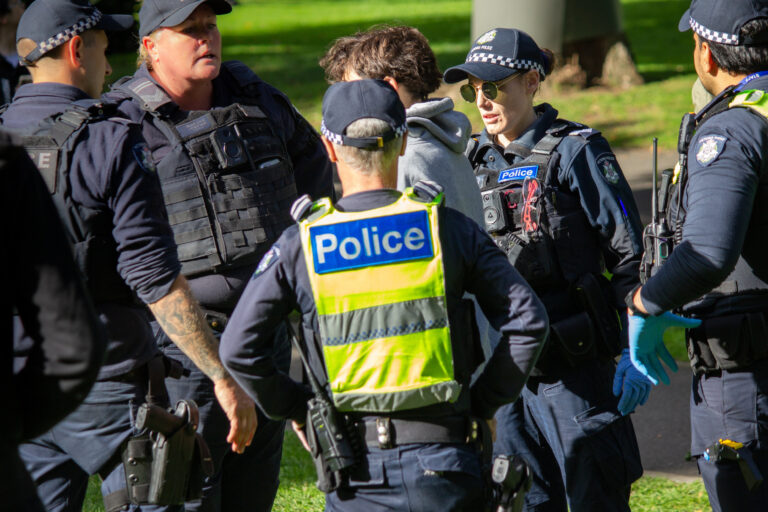
We then suggested decriminalisation instead. Decriminalisation is not ideal: it prohibits the supply side, which still allows criminals to control the illicit market, but as a first step towards a legal market at least we could stop arresting around 4000 Victorians each year, people largely from marginalised communities already over-represented in the justice system. At least we could start undoing the harms associated with arrests and contact with the criminal justice system, and at least we could free up the police, the courts and the jails to deal with the crimes that reduce community safety.
We introduced our Drugs, Poisons and Controlled Substances Amendment (Regulation of Personal Adult Use of Cannabis) Bill 2023 under the name of my colleague, Ms Payne. It was a modest bill that would have made it lawful for an adult to possess small quantities of cannabis, cultivate six cannabis plants for personal use and gift cannabis to another adult. It was essentially the same scheme that has been successfully operating in Canberra, with a few necessary improvements.
During the debate we heard the concerns of members around children accessing cannabis and the inevitable increase in hospital presentations and carnage on our roads. Unfortunately, or fortunately, that is not the data that was coming out of the ACT. People may cherrypick evidence from overseas jurisdictions – some are dealing with the transition to a legal market better than others – but when the data is for decrim and when it comes from a jurisdiction more or less across the border and it is looking so positive, you would think it would be hard to dismiss.
The government rejected our bill but committed to consult with stakeholders – they did not. But being the team players that we are, we agreed to refer the bill to an inquiry. The inquiry into the Drugs Poisons and Controlled Substances Amendment (Regulation of Personal Adult Use of Cannabis) Bill 2023 heard evidence from the justice, mental health, health and legal sectors, the vast majority of whom were in favour of decriminalisation as a model that would serve the public health goals of harm minimisation and prevention.
The committee travelled to the ACT to see firsthand evidence that the scheme is working as intended. Arrests are down 94 per cent. Cannabis use among young people has decreased. There has been no increase in hospital admissions.
None of the dire predictions around cannabis decriminalisation have materialised. In fact we had the privilege to meet with the ACT chief police commissioner himself. He told us that they had initially had concerns, but none had come to pass.
The report was tabled with recommendations fully supported by the government members of the committee, drawing on the experience of the ACT in successfully decriminalising the cultivation and possession of small quantities of cannabis for personal use with its associated health, social and legal benefits. The committee also resolved to consider adopting an approach in line with that proposed by the bill, along with any recommended amendments from the report.
It is a sensible proposal. It is rooted in evidence and supported by the majority of Victorians, but this government has ruled it out completely. They will not even consider it. We are frankly gobsmacked at the lack of courage, the utter cowardice, of that decision. We are also puzzled. Why wouldn’t the government – this progressive Victorian Labor government – support a proposal to stop needlessly arresting people?
If you want to forgo the illicit cannabis market big bucks, fine. But arresting people for possessing a bit of pot – is that how they are tackling crime in this state? We are talking about allowing people to grow a few plants in their backyards and to be able to possess a small amount of cannabis for personal use.
How stupid does this government think people are? As remand centres and prisons fill, does this government think that no-one knows the difference between violent crime and the victimless offence of possession or use of cannabis, that people do not know the difference between a machete and a joint?
Do they honestly think people are terrified by the thought of pot smokers running amok? Are they really bundling up people who want to grow some pot in their gardens with the sort of serious crime that communities are actually contending with? Do they really think the arrest of cannabis users makes people feel safer?
Let us recall that around three-quarters of a million Victorians consumed cannabis in the last 12 months. Are we going to lock them all up? This is a government fixated on flexing their tough-on-crime credentials at any opportunity before the next election, and your average punter can tell the difference between sensible policy and kneejerk tough-on-crime rhetoric. There is a significant cognitive dissonance within the Allan government.
Last week I was truly proud and humbled to be present for the signing of Australia’s first treaty at Government House. This government has every right to be proud of that accomplishment, but this historic achievement is seriously undermined by the fact that the government continues to use cannabis as a means of shuttling First Nations people into the criminal justice system. The Victorian Aboriginal Legal Service told the bill inquiry that:
… Aboriginal people were eight times more likely to be arrested for possession of cannabis than non-Indigenous people. In contrast, non-Indigenous people arrested for possession of cannabis were 50 per cent more likely to receive a caution in Victoria.
Eight times as likely to be arrested, half as likely to be offered diversion – and that is not a novel fact. It is one the government has heard time and time again.
I hardly recognise this Labor government as such. I really do not know what they stand for. It is content to rest on past achievements, leaning on its establishment brand. They are about as progressive a government as can be when their policy goals are dictated by the likes of Fifi, Fev and Nick – I hope I got that pronunciation correct this time – or whatever the Herald Sun lead with on their front page.
The Labor Party I grew up with stood for social justice, for equity and for human rights. It was a party of vision that introduced land rights, the Racial Discrimination Act 1975 and no-fault divorce. It was a party for workers, and let us face it, cannabis is first and foremost a working-class drug. It was a party that espoused progressive values and policies.
At least their members seemed to hold fast to the light on the hill and their progressive values. The values these members express, the policies they want to see adopted, are befitting of a movement that introduced universal health care and free tertiary education, of a party synonymous with progressive reform. The ALP state conference resolutions are totally reasonable motions.
The delegates to that conference represent the workers of this state: workers from the health, the mental health and the disability sectors; people who work in public housing and homelessness services; workers from the AOD sector and the aged care sector. They see the underinvestment by this government in those sectors and the impact that it is having on the health and wellbeing of Victorians, and they propose a commonsense solution. Revenue from a legalised market could be very useful to a state drowning in debt.
Of course it would require an agreement between the state and the federal governments, but they are both Labor governments, so it should not really be hard to get some level of collaboration over the division of taxes and income. Wouldn’t it be lovely to have those funds be able to contribute to meeting the recommendations from the Royal Commission into Victoria’s Mental Health System, the reform of the alcohol and other drug sector, WorkCover, housing and Indigenous health or even to fund our state’s contribution to the national disability insurance scheme.
We are not pretending it is going to pay for all of those things, but if this government has reached a point where a billion dollars is something to sneer at, I think we have all got a big problem. It certainly makes a lot more sense than simply handing it all to the Comancheros.
I hope I am alive to see the day when governments finally wake up to the fact that these policies harm people and enrich serious crime gangs. But if we are not there yet, how about the idea that even the money saved through not policing a victimless offence has utility? It is obviously not as much as what could be derived from legalising cannabis; however, the trauma and harm averted would have huge downstream positive impacts for our society and for our economy.
And then there are the people of course – the many vulnerable Victorians who would not have their lives ruined by encounters with the criminal justice system. We do not want children to have access to cannabis. Children should not be consuming cannabis; it is bad for their brains. But make no mistake, for all the prohibition, kids have no trouble, no trouble at all, accessing cannabis.
It is easier for a kid to get their hands on some weed than it is to buy a packet of cigarettes. Worse, the prohibition, the ‘just say no’ approach, means we are not having the sorts of conversations we should be able to have in schools. There is inadequate education around drugs and harm reduction in school, so yes, it is quite possible that kids are not getting the right messages. We are not properly informing our young folk.
Interestingly, very recent data out of Canada shows that, contrary to what is happening here, youth consumption of cannabis has fallen since the legalisation of cannabis. There was even a slight increase in the number of young people who reported that they have never used cannabis. Of course Canada accompanied their legalisation scheme with a comprehensive education program.
What a bold approach: put the facts in front of young people and treat them with a little respect. Maybe disseminating information about harm minimisation and risk is more useful in reducing youth consumption than fear campaigns. Germany also recently reported no increase in use among young people or in traffic accidents since legalisation.
Given the wealth of evidence, the backing of experts and the wide public support, I really did not think we would still be having to convince this government to make at least some movement towards reform.
Nobody said this was going to be easy. Decriminalisation and eventually legalisation will present all sorts of challenges, no doubt. There will be problems to solve and things to nut out, but we cannot keep doing what we are doing. Adults should be free to consume cannabis. They do it already. We are missing an opportunity to get on the front foot and to do this right. What have we got to lose?
We call on this government to respect the clearly articulated views of its own party members and reform our cannabis laws. Cannabis has been prohibited in Victoria since 1927. We are coming up to the centenary of this stupid and ineffective law.
We can keep trying to deal with these same problems that we have been dealing with unsuccessfully for nearly 100 years or we can end the prohibition and perhaps get on with dealing with some new problems and some real problems with fresh eyes.
[Debate continued]
David ETTERSHANK (Western Metropolitan Region):
Can I firstly thank all of those who contributed to this in a very frank and intelligent and at times amusing manner. I have so much to reply to and so little time. Can I first of all pick up Dr Heath’s point about Penington being the go-to place for advocates of drug reform, and could I remind you that until earlier this year the chair of the Penington Institute was indeed Kathryn Greiner – yes, that Greiner.
Can I remind you also that in terms of the Penington Institute itself we are talking about, if you look at their board of trustees and directors, a royal suite of leading medical and health experts that oversee this. This is not some sort of bolshie – what did you say – go-to place for advocates of drug reform.
Can I also just put some history in this too, and if I may just speak in the context of Penington and also Mr Davis, who I am really glad has joined us today. Penington was obviously employed in this place when you guys – remember; some would – were sitting on this side of the chamber, and of course Penington recommended the legalisation of cannabis, and Mr Davis made a very, very erudite speech – and I genuinely compliment Mr Davis on his speech in May 1996 – endorsing legalisation and expressing a very valid concern that it could lead to increased use of tobacco.
It came that close to being done almost 30 years ago, and reading the debate at that point in time it is to us deeply, deeply depressing that we are still talking the same garbage. We are still having the same futile arguments and dancing with shadows, or as Paul Keating would say, ‘wrestling with a column of smoke’ – doubly appropriate in this context.
I was really disappointed, Dr Heath, to hear you extensively quoting Drug Free Australia, an organisation, as we saw in the hearings, that were most prominent in their submissions for almost totally footnoting only their own publications. I will perhaps just leave it at that, because the rest was just embarrassing. Another thing just to put it into some perspective, is you quoted some really impressive stats – most of them came from Drug Free Australia, so let us just take that for what it is.
Can I just suggest if you want a simple indicator, look at the table of harms and look at all of the other drugs that cause so much damage to people’s health. Right down the bottom at about number 15 or 20, you will find cannabis – so if we can get rid of the other 20, that would be great.
In terms of the contributions from our Labor colleagues, can I first of all thank Mr Galea for his generous invitation. I think there is something about inducing parliamentarians, but let us not go there. In taking Mr Galea’s and other contributions, we have heard about how the Labor Party state conference is representative of a broad cross-section of society, and yet they voted unanimously – they voted unanimously to do that. In the context of Mr Batchelor’s last contribution about the constitution: you are wrong.
[Ryan Batchelor interjected]
You are wrong. Can I just suggest that in terms of the advice that the former Treasurer got, you are wrong, and in terms of the advice that was provided by the Parliamentary Budget Office, you are wrong, so you are wrong. Having had that erudite legal analysis, I am surprised that you did not vote against the resolution at the state conference, but anyway, that is probably another thing.
I also note that the program that you refer to on the web, whilst it goes to 2026 theoretically, was last updated in August of 2023, predating both of those state conferences. In terms of Mr Mulholland –
[A member interjected]
I really appreciate the advice. I often wake up and think, ‘Where will I get inspiration for political success?’ And I go, ‘Far out, I’m going to go to the Victorian branch of the Liberal Party. I mean, they know how to do their stuff.’ I love you all dearly, but seriously, I will give you a yell if I need advice, thanks.
Can I just conclude in saying thank you to everyone. This is a reform that is long overdue. Yes, we have used the Labor Party platform as a foil, but at the end of the day, the case for reform – whether it is legalisation or decriminalisation – is overwhelming, and we call on the government to take action.
[Council divided on the motion]
Voted for: Katherine Copsey, David Ettershank, Anasina Gray-Barberio, David Limbrick, Sarah Mansfield, Rachel Payne, Aiv Puglielli, Georgie Purcell
Voted against: Ryan Batchelor, Melina Bath, John Berger, Lizzie Blandthorn, Jeff Bourman, Gaelle Broad, Georgie Crozier, David Davis, Moira Deeming, Enver Erdogan, Jacinta Ermacora, Michael Galea, Renee Heath, Ann-Marie Hermans, Shaun Leane, Wendy Lovell, Trung Luu, Bev McArthur, Nick McGowan, Tom McIntosh, Evan Mulholland, Harriet Shing, Ingrid Stitt, Jaclyn Symes, Lee Tarlamis, Sonja Terpstra, Gayle Tierney, Sheena Watt, Richard Welch
[Motion defeated 8 votes to 29]